DESIGN SYSTEMS
•
ENTERPRISE UX LEADERSHIP
•
CROSS-FUNCTIONAL EXECUTION
•
PRODUCT STRATEGY
•
AI-ENABLED PRODUCT DESIGN
•
DESIGN SYSTEMS
•
CROSS-FUNCTIONAL EXECUTION
•
PRODUCT STRATEGY
•
ENTERPRISE UX LEADERSHIP
•
AI-ENABLED PRODUCT DESIGN
•
DESIGN STRATEGY & WORKSHOP FACILITION
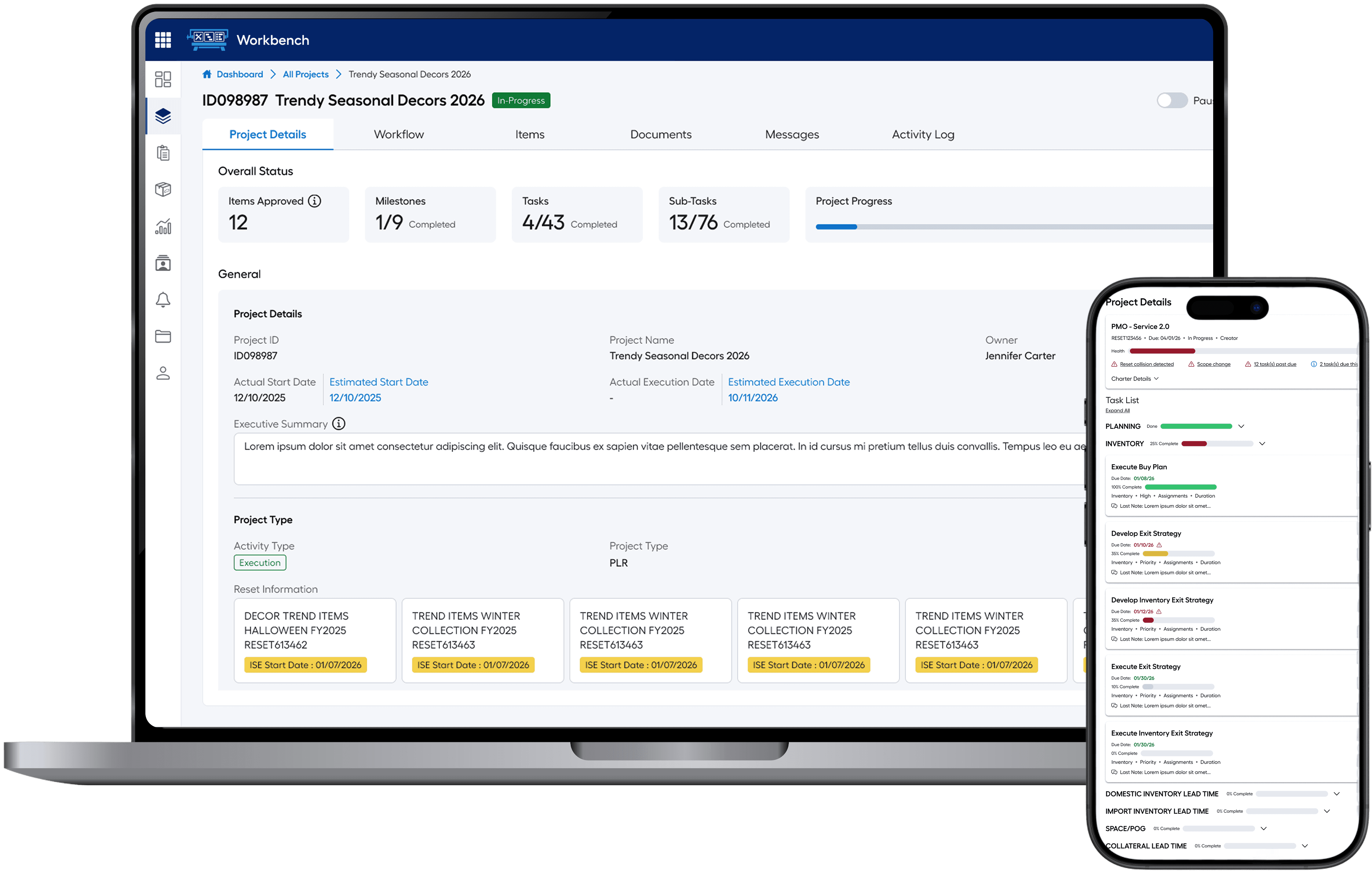
PROBLEM TO SOLVE
Adobe Workfront had become an expensive workaround for Lowe’s merchandising teams.
The platform was designed for broad project management needs—not the specialized, interconnected work required to move a merchandising initiative from planning through execution. Years of customization had made the experience increasingly bloated and slow, while rising licensing costs made further investment difficult to justify.
It also depended on project managers to keep the system aligned with work happening elsewhere. They repeatedly closed tasks, adjusted dates, updated statuses, and assigned the next action—even when another tool already contained the information needed to make those changes.
Replacing Workfront meant more than recreating its screens. The platform sat at the center of a complex operating model involving 18 roles across merchandising and cross-functional partner teams. Each contributed critical data, decisions, dependencies, or approvals. If any part of that system was overlooked, projects could stall downstream.
The challenge was to create a faster, purpose-built platform that could coordinate people, data, and systems—while automating the administrative work that slowed project managers down.
MY ROLE
Lead Product Designer
TEAM
3 People
TIMELINE
8 months
IMPACT
$564,000/yr Savings
Stakeholder comment:

ERIC DAVIS, LEAD PRODUCT DESIGNER
EIGHTEEN ROLES. ONE CONNECTED WORKFLOW.
Before defining the product, we needed to understand the system of people behind it.
I led months of research, interviewing and shadowing team members as they planned projects, entered data, coordinated handoffs, resolved exceptions, and secured approvals. I also facilitated workshops and usability studies to expose where the documented process differed from the work people actually performed.
The research revealed 18 distinct roles and responsibilities spanning merchandising and its cross-functional partners. Each role saw only one portion of the process, but its decisions affected everyone downstream. Information was repeatedly entered, interpreted, handed off, and approved across teams—often with limited visibility into ownership or what was blocking progress.
We also traced where project managers were manually translating activity from one tool into updates in another. Those moments became opportunities for automation, not merely interface improvements.
This work gave us a shared map of the merchandising lifecycle and helped the team distinguish essential business rules from complexity created by the old software.
01 ROLE-BASED RESEARCH
Observed how each role used Workfront, what information they needed, which decisions they owned, and how their work affected downstream teams.
02 CROSS-FUNCTIONAL WORKSHOPS
Brought teams together to map dependencies, reconcile competing needs, and align on a shared process.
03 SYSTEMS MAPPING
Documented where data originated, how it moved between tools, and which routine updates could be triggered automatically.
04 INTERATIVE VALIDATION
Used prototypes and usability testing to validate workflows before committing engineering resources.

LISA ORLANDO, MERCHANDISING PROGRAM MANAGER
FROM PROJECT TRACKING TO WORKFLOW ORCHESTRATION
01 ONE SOURCE OF TRUTH

Created a shared project record so teams could work from consistent, current information instead of reconciling disconnected updates.
02 ROLE-SPECIFIC EXPERIENCES

Focused each view on the tasks, decisions, and data relevant to that user while preserving a connected end-to-end workflow.
03 EVENT-DRIVEN AUTOMATION

Used activity in connected tools to complete routine updates in Workbench without requiring project managers to re-enter information.
04 AUTMATED TASK PROGRESSION
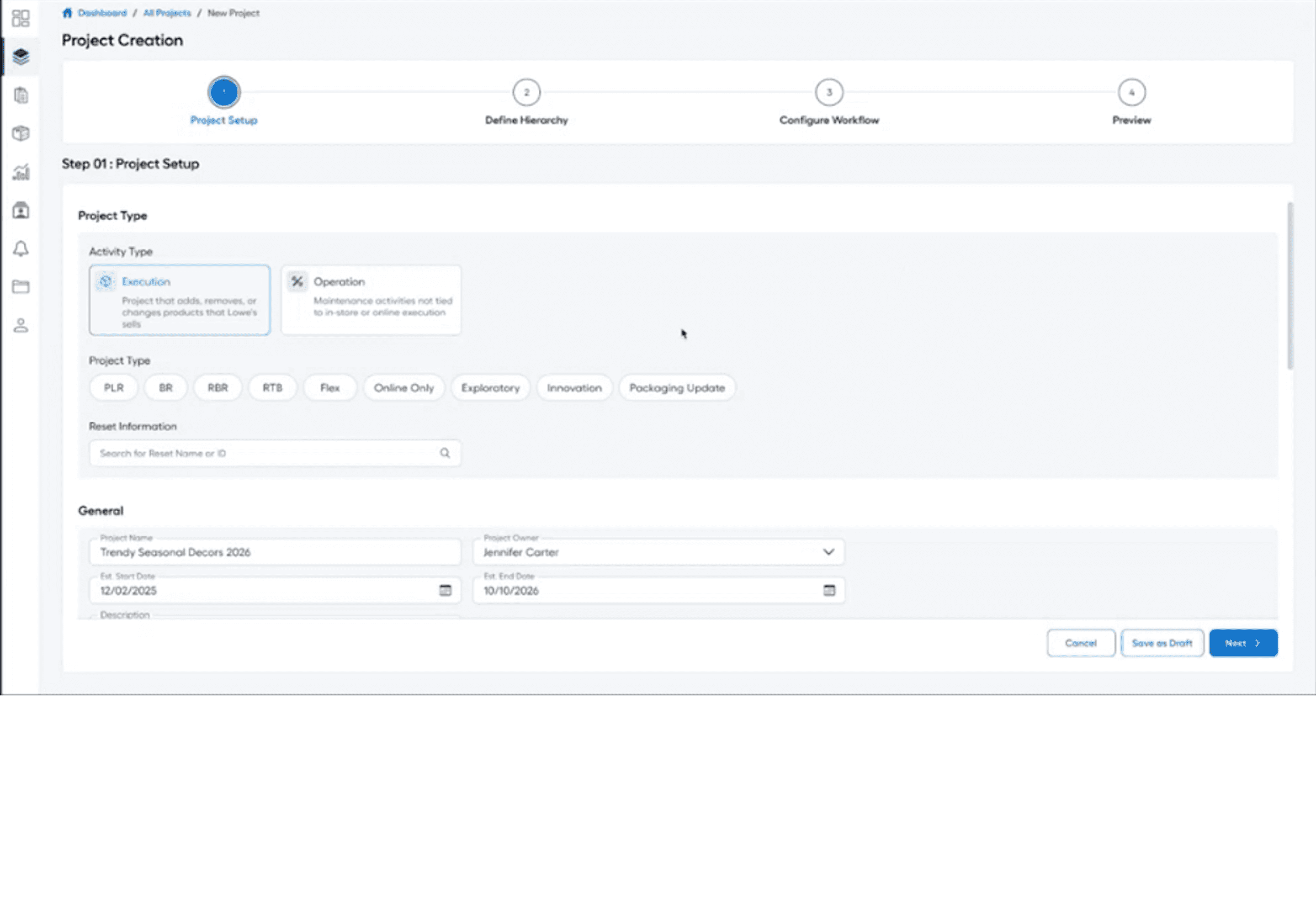
Closed completed work, updated project status, and assigned the next task when established conditions were met.
05 VISIBLE DEPENDENCIES

Made ownership, approvals, blockers, and downstream consequences easier to understand so teams could act before delays spread.
06 EXCEPTION-BASED MANAGEMENT
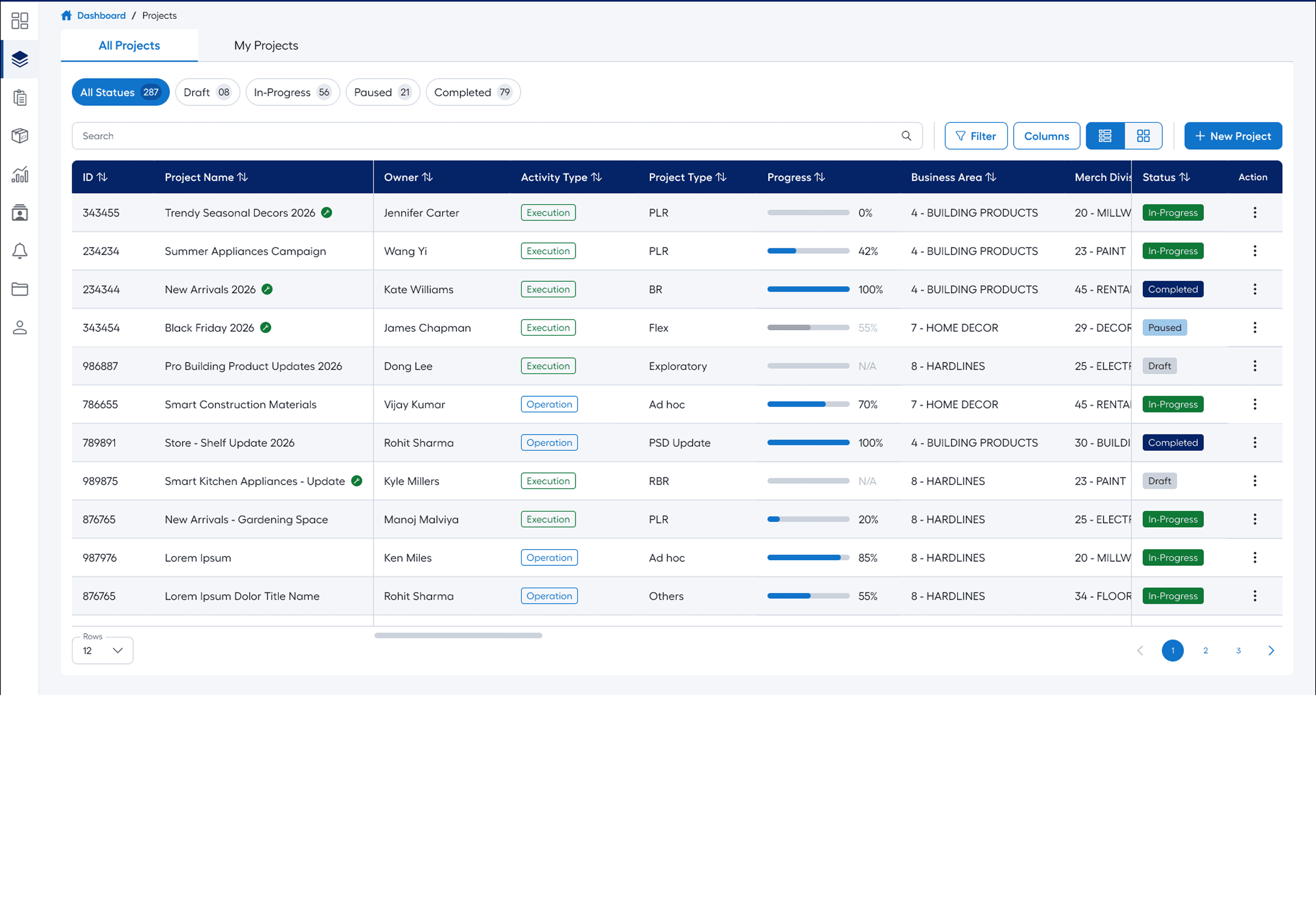
Shifted project managers’ attention from routine system maintenance to risks, blockers, and decisions that required human judgment.
BUILT AROUND THE WORK - NOT THE ORG CHART
01 ROLE-BASED RESEARCH
Observed how each role used Workfront, what information they needed, which decisions they owned, and how their work affected downstream teams.
02 CROSS-FUNCTIONAL WORKSHOPS
Brought teams together to map dependencies, reconcile competing needs, and align on a shared process.
03 SYSTEMS MAPPING
Documented where data originated, how it moved between tools, and which routine updates could be triggered automatically.
04 INTERATIVE VALIDATION
Used prototypes and usability testing to validate workflows before committing engineering resources.
Eliminate busy work.
In Workfront, project managers spent too much time maintaining the representation of the work: updating dates, changing statuses, closing tasks, and assigning what came next.
WHAT THIS WORK DEMONSTRATED
Complexity belongs in the system, not on the customer.
Enterprise transformation starts with understanding how work actually gets done.
The visible interface was only one part of this project. The deeper design challenge was aligning 18 roles, their data, their approvals, and the systems they used into a coordinated workflow. Research created the evidence needed to separate essential operational complexity from friction the organization had simply learned to tolerate.
My role extended beyond interface design. I created alignment across teams, translated research into product strategy, facilitated decisions between competing stakeholders, identified automation opportunities, and helped define a scalable foundation for a critical internal platform.
The biggest lesson was that replacing a legacy tool is not primarily a feature-parity exercise. It is an opportunity to question inherited processes, clarify ownership, connect systems, and remove work that people should never have needed to perform manually.
Business Partner comment:

RICHARD HEURTA, RETAIL PROJECT LEAD
OTHER CASE STUDIES

UX / PRODUCT DESIGN
Building a scaleable system to allow merchandisers to create curated customer experiences based on contextual, category, and customer behavior signals.

UX / PRODUCT DESIGN
An end-to-end experience that helped customers explore color, visualize it in a real space, configure a compatible product, and order custom-tinted paint online.

© 2026 ERIC DAVIS DESIGNS