DESIGN SYSTEMS
•
ENTERPRISE UX LEADERSHIP
•
CROSS-FUNCTIONAL EXECUTION
•
PRODUCT STRATEGY
•
AI-ENABLED PRODUCT DESIGN
•
DESIGN SYSTEMS
•
CROSS-FUNCTIONAL EXECUTION
•
PRODUCT STRATEGY
•
ENTERPRISE UX LEADERSHIP
•
AI-ENABLED PRODUCT DESIGN
•
PRODUCT STRATEGY & DESIGN LEADERSHIP

PROBLEM TO SOLVE
A hammer isn't a refrigerator. One PDP couldn't fit every way people shop. Customers use different criteria to evaluate different products. A tool shopper may prioritize dimensions, material, and compatibility. An appliance shopper needs capacity, installation requirements, features, and delivery details. A shared, rigid template buried those distinctions.
Merchandisers compensated by adding more content to the same structure. The result was excess complexity, inconsistent hierarchy, and whitespace that wasn’t helping customers make a decision.
MY ROLE
Lead Product Designer
TEAM
3 People
TIMELINE
6 months
IMPACT
+125 bps CVR
Stakeholder comment:

A SMALL TEAM. A SIX-MONTH RUNWAY.
LEAD DESIGNER
Strategy, design direction, alignment, delivery
SENIOR DESIGNER
Interaction design, prototyping, system definition
RESEARCHER
Customer behavior, concept validation, usability report
CONTENT STRATEGIST
Information hierarchy, language, governance
FROM GENERIC TO CONTEXT AWARE


01 INFORMATION HIERARCHY
Prioritize attributes that mattered most for each category and context.
02 PROGRESSIVE DISCLOSURE
Made supporting details available without competing with purchase decisions.
03 MERCHANDISING CONTROL
Create reusable components that can be leveraged by category manager in a wysiwyg editor.

ERIC DAVIS, LEAD PRODUCT DESIGNER
SIX TEMPLATES. ONE COHERENT SYSTEM.
01 APPLIANCES
Need specifications and capabilities forefront to help differentiate between similar models. Also, needed a way to see comparable models for less.
02 TOOLS & ACCESSORIES

Need very little information to make purchase decision. Price and fulfillment speed are primary driving factors.
03 DECOR

Visuals are more important than specifications. Need ability to visualize it in their space. Need to see complimentary items to finish room or project.
04 FLOORING

Need some specifications, such as durability and stain resistance. Wanted a project estimator tool to help measure space and determine final project cost.
05 IN STORE

Customers in store don't need a fully loaded PDP. They're looking for aisle/bay, some addition specs and info. Page performance is a big factor.
06 TRACKED PURCHASE BEHAVIOR
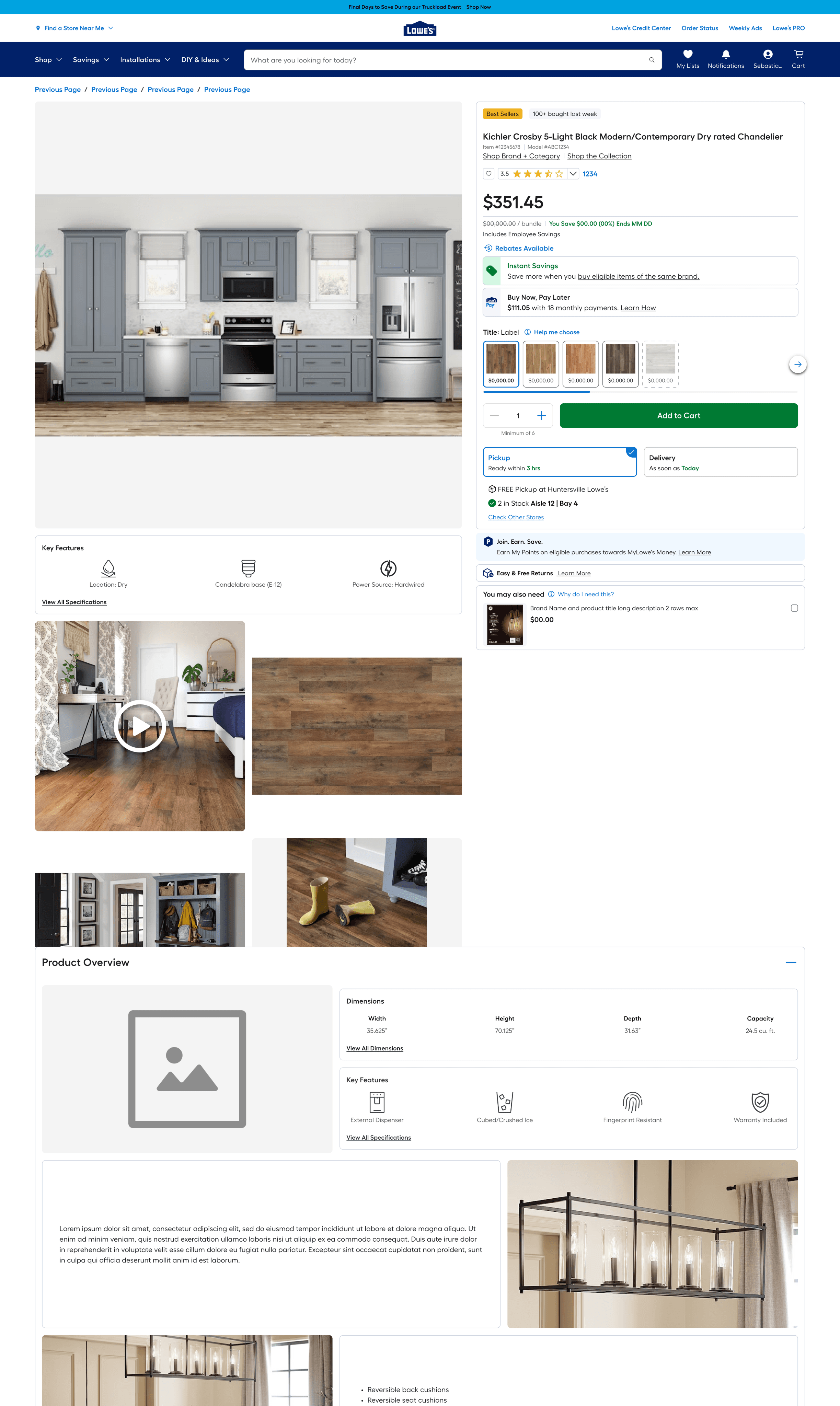
We tracked a variety of other purchasing and browsing behaviors to determine what information or layout was important to each user.
A more relevant product experience helped customers decide with confidence—and proved that reducing complexity doesn’t mean removing value.
WHAT THIS WORK DEMONSTRATED
Consistency and sameness are not the same thing.
A scalable system can create more relevant experiences without becoming more complicated. The breakthrough was moving the conversation away from page density and toward customer decision-making.
This work started with very different stakeholder direction. I was able to lead the team to a better strategy, but it wasn't all sunshine and rainbows. I would have challenged the initial direction with a little more tact and data earlier. We spent several weeks debating the right strategy. I learned from this project is to engage the engineering team early and often. Without a proper agile team we would never have been able to complete this in 6 months. Once launched it was so successful they continue to roll out new adaptive templates and new ways of understanding user context to dynamically render the PDP template.
Business Partner comment:

JASON PINKOWSKI, DIRECTOR OF DIGITAL CATEGORY EXPERIENCE
OTHER CASE STUDIES

UX / PRODUCT DESIGN
An end-to-end experience that helped customers explore color, visualize it in a real space, configure a compatible product, and order custom-tinted paint online.
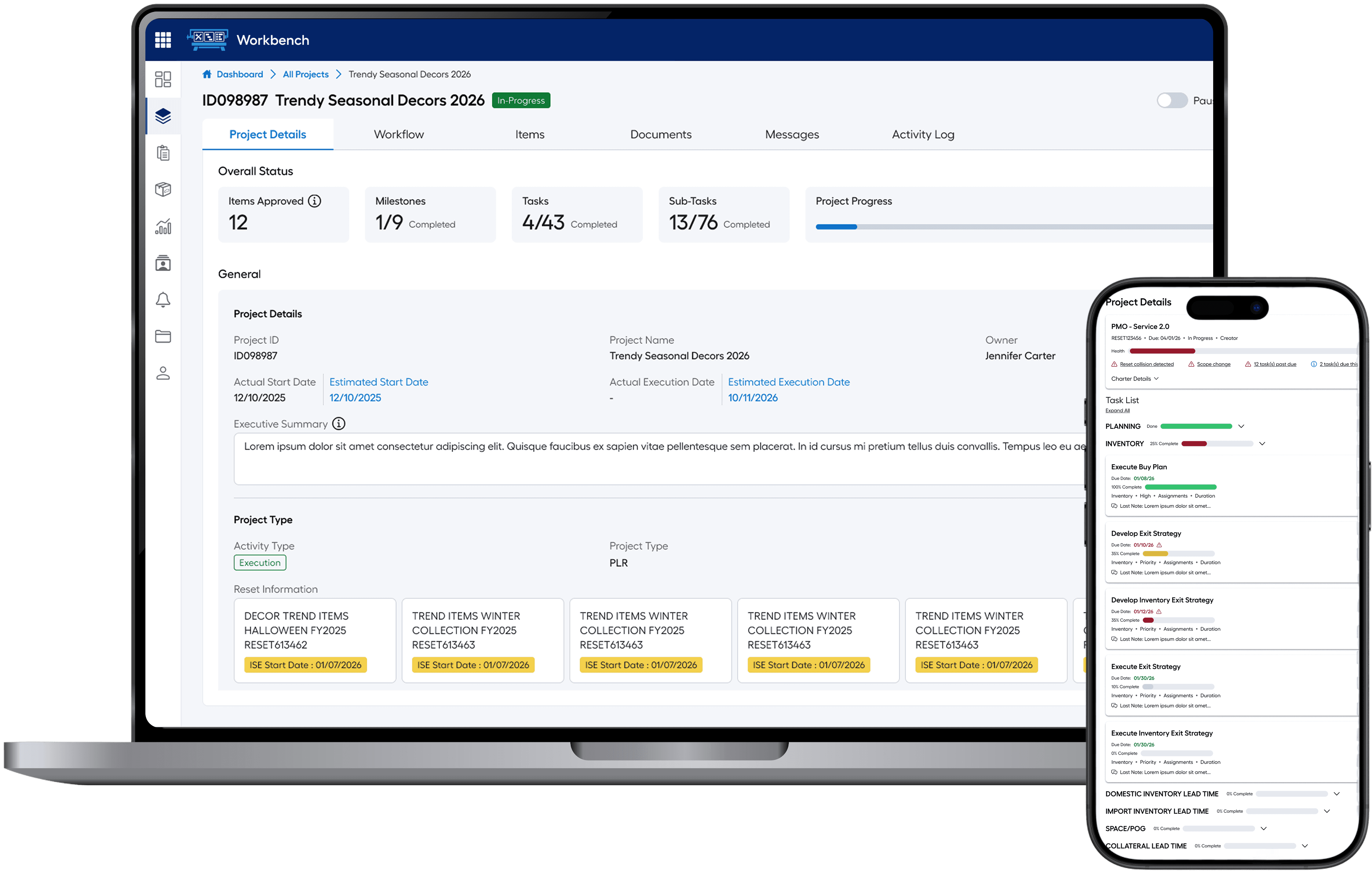
UX / PRODUCT DESIGN
A ground up tool for merchants and project managers to implement, schedule and track merchandising projects getting completed across 1000s of stores.

© 2026 ERIC DAVIS DESIGNS